
The “Freemium” Model: How “giving away” a product can be the best sales strategy
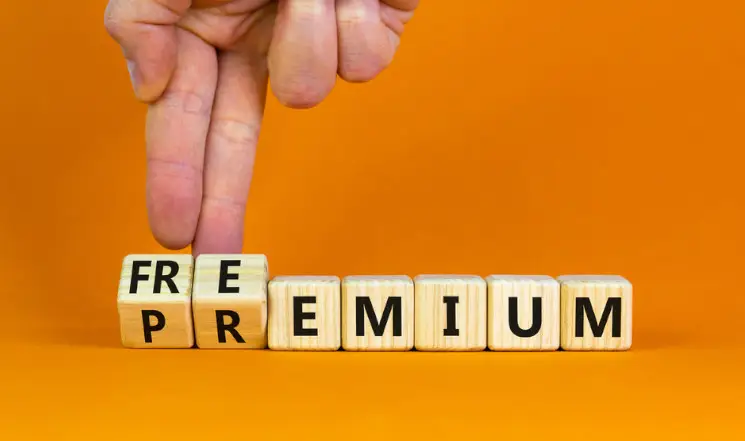
Welcome to the universe of the Freemium model, that irresistible formula with which companies like Spotify, Dropbox, or Zoom have managed to conquer millions of users worldwide. The idea is simple: I give you a basic version of my product and, if you want more features or to eliminate limitations, you have to pay.
What few people know is that behind this model there is a very well-calculated psychology and metrics that mark the difference between success and failure.
Spotify: from “free” to essential
Spotify was born in a market that seemed impossible to conquer: online music, dominated by piracy. How to compete against free? With something even better: free but legal.
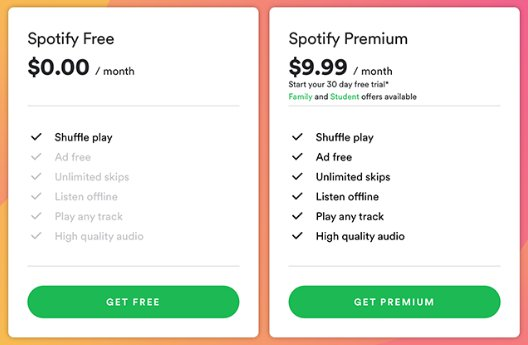
Its basic version allowed listening to music without paying, but with limitations (ads, restricted song skips, inferior sound quality). Millions of users found it sufficient, but a percentage—that small key percentage—decided to pay for the Premium version. Today, almost half of its revenue comes from those subscriptions, and the rest from advertising that free users endure.
Dropbox: virality at zero cost
Remember when Dropbox gave you additional space if you invited a friend? It was one of the most brilliant moves of the Freemium model. The basic product was free, but you soon realized you needed more gigabytes. And there was the paid version.
The key was combining “free” with virality: each user became a promoter of the service because they had a direct incentive. A textbook win-win.
Zoom: the video call that saved the pandemic
In the midst of the pandemic, millions of people tried Zoom for free. The 40-minute limitation per meeting in the free version seemed like a small obstacle, but enough for companies, schools, and professionals to migrate to the paid plan.
The timing was perfect, but the logic was the same: try without barriers, get hooked on the product, and pay to eliminate the restrictions.
The psychology of Freemium: giving without giving away too much
Why does this model work? Because it plays with four very powerful psychological elements:
- Risk-free trial: The customer can try before paying. The fear of making a mistake is reduced.
- The discomfort of limitation: Restrictions (ads, time, capacity, blocked features) generate a slight frustration that pushes the user toward the paid version.
- Commitment and escalation: Once the user gets accustomed to the free product (habit, convenience, integration into their routine), resistance to abandoning it is generated. This sets the stage for paying for improvements or to not “lose” what has already been gained.
- Social proof and network effect: A large free base attracts more users (network effect), which reinforces the perception of product legitimacy. As the community grows, social or professional pressure increases to move to the premium level and not fall behind.
Metrics that matter
For this model to be profitable, certain indicators must be measured and controlled:
- Conversion rate: What percentage of free users converts to paid? (typically between 2% and 5%).
- Customer acquisition cost (CAC): How much does it cost you to attract each new user?
- Customer lifetime value (LTV): How much money does a paying customer generate on average during their relationship with you?
- Retention: How long do they remain using your product before abandoning it?
Without these metrics, the Freemium model is Russian roulette.
And can an SME apply the Freemium model?
Of course. You don’t need millions of users to leverage this strategy:
- A SaaS app for SMEs: Offer a free version with basic functionalities (limited invoice management, restricted number of users) and charge for advanced access.
- Educational software: Give free access to an introductory course and charge for premium content.
- A design tool: Free version with watermark and limited features; premium version without limitations.
The objective is the same: attract users with a free service and monetize with a premium service.
Conclusion: Free, but calculated
The Freemium model is not giving away, it’s planting seeds. You give enough to hook them, but reserve what’s valuable for those who decide to take the step and pay. Like any strategy, it requires a fine balance and clear metrics. When it works, it turns something as simple as a free product or service into an exponential growth machine.